



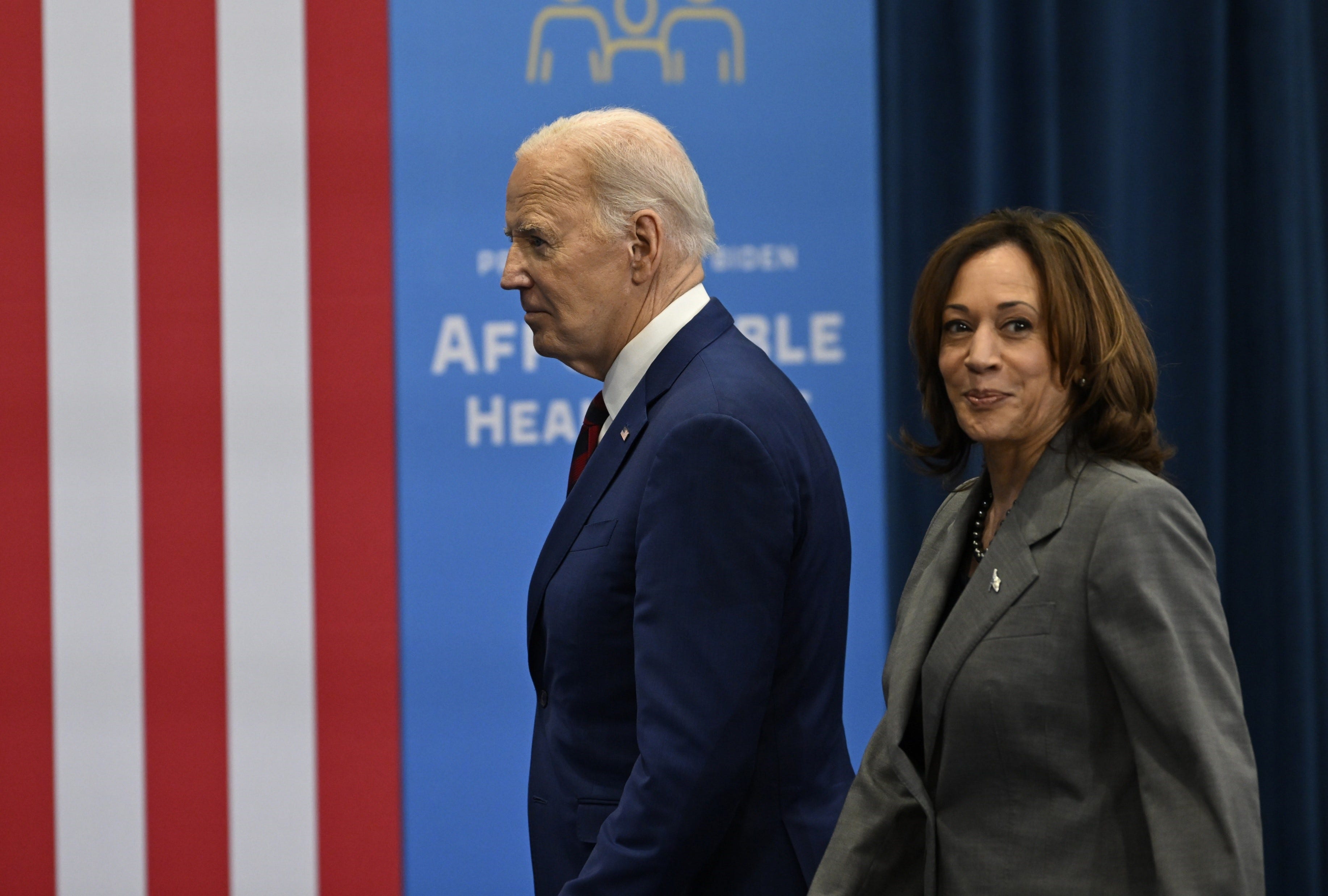
In the weeks since Donald Trump’s victory, Democrats have been busily working to understand the factors that drove their loss. Some have pointed to tactical errors; others believe the national headwinds were simply too much to overcome. We at TLP have highlighted more structural problems we see facing Democrats—the unpopularity of some of their cultural attitudes and the creeping erosion of support among working-class and non-white voters, for example—and how this put the party at risk heading into this election.
But there is another, more understated reason that likely contributed to their woes this year: they learned the wrong lessons from the previous two national elections.
Let’s start with the 2020 presidential election. At first glance, Democrats did very well. Joe Biden defeated Trump, achieving something rarely seen in American political history: the ouster of an incumbent president seeking re-election. And Biden’s Electoral College victory, 306–232, was fairly decisive. His party also retained control of the House and flipped the Senate, giving them a governing trifecta.
Democrats—especially Biden—interpreted these results as a mandate for sweeping change and subsequently pursued one of the most ambitious legislative agendas in recent history. However, far from an electoral rout in the vein of FDR in 1932 or LBJ in 1964, Biden’s win was actually very close, and it wasn’t at all clear that the American people were clamoring for the type of transformative change that Democrats were offering:
Though Biden’s Electoral College margin was quite decisive, he really won by just 42,918 votes across the three closest states: Arizona (10,457), Georgia (11,779), and Wisconsin (20,682). Another way of thinking about this: if Trump had won even half (or 50.01 percent) of those additional Biden votes in each state, he would have been re-elected.
Jon Ossoff’s win in the Georgia Senate runoff gave Democrats a 50–50 working majority in the upper chamber, with Vice President Harris casting tie-breaking votes. But his final margin was just 1.2 points (or 55,232 votes)
In the House, Democrats actually experienced a net loss of seats and kept their majority by just 31,751 votes across five districts.
Further down the ballot, the party’s successes were even more limited, as they failed to flip several key state house chambers on which they had spent hundreds of millions of dollars.
A reasonable read of those results might have been that voters were exhausted with Trump’s antics and simply wanted to return some stability to the government, but also that they did not trust the Democrats enough to give them convincing majorities. But instead of reflecting on this result, the party instead sought to be got ambitious. They passed several sweeping policies on party-line votes, sometimes with more care given to the size and price tag of various bills than the actual programs in them.
To be sure, some of these policies were popular. But the concerted push to secure these wins meant that they were spending less energy addressing two key issues that became voters’ biggest concerns over the past few years: inflation and immigration. In fact, there is plenty of evidence that Biden’s actions in office very likely exacerbated those concerns. Two of his signature achievements—the American Rescue Plan and Inflation Reduction Act—were negatively associated with inflation. And his early moves to overturn Trump-era immigration policies likely precipitated subsequently record-high levels of border crossings.
Unlike past Democratic presidents who won power with a broad mandate—Roosevelt (1932), Johnson (1964), and Obama (2008)—Biden came into office with some of the thinnest margins possible for a governing majority. Yet, he took his win over an incumbent president as a sign that Americans were fully on board with his agenda, one that mirrored the size of what his Democratic predecessors had delivered on.
Then came the 2022 midterms, which took place on the heels of the Supreme Court’s Dobbs ruling overturning Roe v. Wade. The issue of abortion was suddenly a top priority for Democrats everywhere. A Pew Research poll found that the share of Democratic voters saying abortion was “very important” to their midterm vote skyrocketed from 46 percent before Dobbs to 75 percent just before the election. Additionally, in the months leading up to Election Day, states all across the country—including some that were deeply Republican—had passed ballot measures to protect abortion access, a sign of widespread enthusiasm around the issue.
Consequently, Democrats came to believe that the Dobbs backlash and the presence of extreme Republican candidates in some key contests might be enough to forestall the expected drubbing that the president’s party almost always received in midterm years. And there was some validity to this theory. Democrats did ultimately have a good midterm by historical standards, limiting losses in the House, gaining a seat in the Senate, netting one new governorship, and flipping a handful of state-legislative chambers. They did this even as Biden’s personal approval rating was mired in the low-40s.
So, many in the party became convinced of a new theory: as long as abortion rights were threatened and Trump or MAGA candidates were on the ballot, an “anti-MAGA majority” would show up to defeat Republicans, regardless of how those voters felt about Biden or the Democrats. As one progressive strategist put it, “When elections are clearly about Trump and MAGA, MAGA will lose.”
However, this reading of the midterm results obfuscated the true political landscape:
Despite Democrats’ success in a handful of swing races and the popularity of abortion rights, the national environment that year tilted in favor of Republicans, with the House popular vote leaning nearly three points to the right. In non-swing states, Republicans basically experienced a typical wave election, even in some places where voters also backed pro-choice measures.
Nearly half (48 percent) of voters said the top issue facing the country was not abortion but the economy, and these voters broke Republican by a two-to-one margin (65–32). Abortion was a distant second at just 10 percent.
There was also significant crossover support for abortion from voters who backed Republican candidates, a sign that the issue might not necessarily give Democrats a boost in every race.
The midterm electorate was overwhelmingly sour on Biden: 57 percent disapproved of his job performance, including 44 percent who “strongly” disapproved.
As NBC’s Chuck Todd noted recently, Bill Clinton and Barack Obama experienced typical midterm drubbings during their first terms. In response, both men were forced to re-tool their messaging and change some things about how they governed. Biden, however, did not face the same outcome, likely precipitating to a cascade of ill-fated decisions.
Democrats thus marched into 2024 with a weak candidate, a flawed theory of why they had been winning, and a misreading of the issues that mattered most to people.
The results of the midterms had quashed any discussion of replacing Biden on the ticket and were likely a deciding factor behind his own decision to seek re-election, as he believed they validated the work of his first term. And, as the president and his inner circle liked to remind people, he was the only person who had proven he could defeat Trump.
This reading of the political landscape may have also influenced Biden’s decision to put “democracy protection” at the center of his re-election campaign, as well as Harris’s decision late in the race to pivot away from a positive message detailing her agenda for working- and middle-class Americans toward one centered on threats to abortion and Trump’s “fascist” tendencies.1
But in the end, none of it worked. A consensus is now forming that this year’s results were a referendum on Biden’s presidency. Rather than abortion, the top issues on voters’ minds were the ones that had festered during his term—inflation and immigration—and voters who prioritized them overwhelmingly broke for Trump. In several states, voters passed measures securing access to abortion while breaking for Trump by double digits. And, while some MAGA candidates running in swing states did lose, the ultimate MAGA candidate did not.
All this demonstrates the danger of creating narratives of convenience rather than being clear-eyed about the reasons for defeat. For Democrats, the path of least resistance heading into 2024 was sticking with an incumbent president who was decently popular among the party’s voters and running on abortion and democracy—strong issues for them. They pointed to the results of 2020 and 2022 as evidence to justify these decisions.
However, this led them to also ignore important warning signs, including that voters overall weren’t happy with Biden and cared most about inflation and the border. And their inability to recognize this may well have delivered the presidency to Trump again.
What was remarkable about these moves is that Hillary Clinton memorably employed the exact same strategy against Trump in 2016—to no avail.
Every day I enter our expenses into a data-base that I created....about 50 different categories. Then, at the end of the month my wife and I go over the data. We are retired, so can afford this extra bit of time.
My point: Immigration, Inflation, increased crime because of progressive ideas, ideas about sexual identity presented in public schools, etc., all speak to the same underlying psychological dynamic as the approach my wife and I take with our finances.....except 180 degrees removed.
With our finances, we get a feeling that things are under control. And with Biden/Harris things felt out of control. It's a psychological need, not really a political position that people were trying to address in their voting.
Harris didn't communicate that feeling of things being in control or that she could provide that psychological need for people. Everyone knew (except her supporters who were in denial) that she was a mainline progressive, and that progressives make things out of control. Her "quick change" in positions communicates someone who is not even in control of herself. Trump communicates getting things under control.....making the world predictable. The guy even handled an assassination attempt by communicating that he was "still in control" of the rally.
It's reassuring and even comforting to feel this way. It's a powerful psychological need. Even his MAGA is a statement of getting things back under control.
COVID craziness! Many independent voters didn't love lockdowns, long school closures, mandated mRNA shots for unwilling citizens- including in some instances pregnant women! Then the overblown, dishonest and censorship heavy covid narratives in the big media (like CNN, NY Times) changed every few months. Trust was undermined, gradually and then all at once. Trumpism is ALSO a rejection of the "elites", the "experts", the conflict of interest laden public health establishment.. And the media!