



⁉️ “Democrats Confront the Party’s Questionnaire-Industrial Complex,” by Jonathan Martin. Readers of TLP know our thoughts about the ideological and strategic limitations of Democrats pledging fealty to every dunderheaded progressive cause under the sun. So it’s refreshing to see a group—appropriately called Majority Democrats—trying to do something about it by offering transparency on the murky world of interest group “questionnaires” sent to prospective candidates mainly as a way to box them in on their “issue.” Think of Kamala Harris’s support for taxpayer-funded trans surgeries for prisoners—a position codified in her response to an ACLU questionnaire—that led to a gazillion dollars in Trump attack ads landing on her head. As Martin explains, this effort is about more than just exposing dumb questions:
There’s also something else at play, I think. And it can be seen in the DNC’s decision not to release its so-called autopsy about the 2024 election. With President Donald Trump on his back foot and Democrats winning off-year races and special elections across the country, most party leaders prefer to stay on offense and not revisit what went wrong in yesteryear. That keeps donors, activists and elected officials in an often-fractious party positive, engaged and generally living in harmony.
If Democrats today don’t re-examine what went wrong, they’re highly unlikely to in the heat of the midterms this fall, let alone during the next presidential campaign itself.
The temptation to simply push back on Trump’s daily eruptions and ride the wave of revulsion toward him, as they did in the 2025 elections, is understandable—it’s just misguided.
There are three glaring reasons why: the 2030 Census’ reallocation of House seats, Democrats’ structural challenge in attaining a real and lasting Senate majority and the white-knuckle ride every four years to hold the Blue Wall and claim 270 electoral votes for the presidency.
In case you missed it, Americans are voting with their feet by moving from blue states to red states. So even if Democrats are able—on a playing field constricted by gerrymandering and polarization—to claim a House majority this fall, they’re confronting a long-term challenge retaining that majority. If the party can’t better appeal to centrist or even slightly right-of-center voters, they’ll likely lose the House in the first midterm of a Democratic president in 2030—and then struggle to reclaim it after the Census shifts more seats to red states.
✍🏻 “Can We Have New Bad Things?,” by Dustin Guastella. Since Donald Trump was first elected president in 2016, his detractors have been wary about his clear authoritarian impulses and efforts to usurp more power in the executive branch. And as his use of that power has widened in his second term, a growing chorus of them is warming to the idea that Trump is, in no uncertain terms, a fascist. Saying so, the thinking seems to go, demonstrates not only a deep knowledge of history but also a willingness to speak urgent moral truths.
The problem is that it’s not only unclear whether this charge has any real utility—what actual change do those employing the “F” word believe it will produce?—but it does carry substantial risks. Writing for the left-wing outlet Damage Magazine, friend of TLP Dustin Guastella encourages liberals and other Trump critics to take a broader view of history and rethink the wisdom of this approach to opposing Trump.
First, there are all kinds of violent norm-smashing, democracy-disregarding regimes that aren’t fascist. And while these are less glamorous compared to fascism...they often bear a closer resemblance. For instance, American politics in the first Gilded Age was full of violent demagogues who used the state to further their personal political ends, who punished dissenters, killed protesters, and stirred up hate. America can be a very violent place. For a long time our political life was quite violent too—though, political violence here was, like everything else, more chaotic. It took several murderous confrontations with striking workers for Congress to finally pass a law in 1893 that prohibited the federal government from hiring private mercenaries to shoot and kill them. All of this was bad, but none of it reached the fever pitch (in murderous quantity or ideological quality) that characterizes fascism…
[T]oday, we try to shoehorn everything that has happened into a mirror of something that has happened before. It’s a kind of inverse-Whiggishness, where we assume that we are bound to repeat the exact same nightmare…Historical analogies can be helpful, of course. We’re pretty sure, for example, that the rise of nationalist populism all over the globe is in response to declining economic prospects of working people. We take this pretty straightforwardly from the experience of Europe in the interwar period. That’s helpful. But beyond this the fascism analogy serves more to obscure a political solution than illuminate one.
And that brings us to the third, and most important problem: yelling “fascism” doesn’t help us…At the tail end of her 2024 campaign, Kamala Harris gravely warned that a second Trump term “would be worse. There would be no one to stop his worst instincts. No guard rails.” She was right, and famously, that message failed. Harris lost the election. This not in spite of her prescient warnings, but, at least in part, because of them.
As the Center for Working Class Politics found, her “democratic threat” message was resoundingly unpopular. Especially with working-class voters. That’s no doubt because the #Resistance philosophy behind it dripped with condescension. It reminded everyone that liberals think Trump voters are a bunch of irredeemable fascists…If you think the person you are trying to win over is an Untouchable, they will smell your hatred from a mile away. Even if you insist that you just want to give them healthcare.
🇺🇸 “Don’t discount American democracy’s resilience,” by Nate Silver. Offering another admonition of those who believe America is fast descending into fascism, Silver encourages people to set aside the emotions of the moment and try to see things a little more clearly. When you do, he argues, you see real signs of optimism for the future of the world’s oldest democracy.
In the process of doing a lot of thinking lately about how it’s going in America, I’ve found myself not really vibing with some of the pessimism I see elsewhere, the constant proclamations that the U.S. has crossed the Rubicon into authoritarianism. It’s prudent to consider worst-case scenarios. What makes the situation especially hard to assess is that there’s no particularly clear precedent for the situation the United States finds itself in right now. No country with this long a democratic tradition has faced this much of a threat to it, and the U.S. is exceptional in general for being the wealthiest nation in world history, perhaps on the verge of a profound economic and technological transformation. No one should be confident about how the story ends. But it can also be hard to see the world through clear eyes when you’re constantly in crisis mode.
For instance, I think it’s reasonable to feel more optimistic about democracy after what’s happened in Minneapolis. Some of what’s been going down there is truly vile: check out this video of former Border Patrol chief Greg Bovino psyching up ICE agents in Minneapolis, for instance. “Arrest as many people who touch you as you want. Those are the general orders, all the way to the very top!” Bovino said. That’s about as authoritarian an attitude as I’ve seen in my lifetime in the United States. But the people have pushed back. The normies are with the protestors, not the cops, and the White House has been in retreat, demoting Bovino last week.
To cut right to the chase: my critique is not so much that these pessimistic accounts overstate the threat to American democracy. Rather, it’s that they underrate the capacity of the world’s longest-standing democracy to play defense. Or if you prefer, they underrate the resistance. Both the capital-R “Resistance” in the form of things like the protests in Minneapolis, as well as Trump’s broader unpopularity.
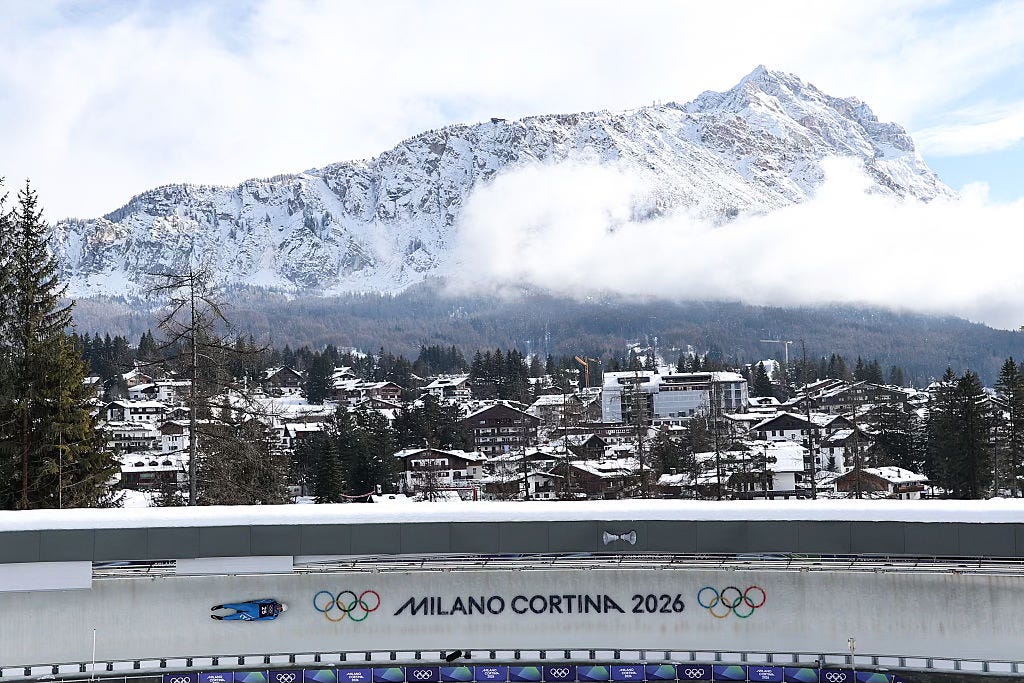
⛷️ 2026 Winter Olympics, from Northern Italy. The Winter Games kick off in earnest this weekend with curling, skiing, snowboarding, luge, hockey, figure skating, and ski jumping all live from Italy starting early in the morning EST. Team USA collected 25 medals in the 2022 Beijing games and will look to move up the ladder against perennial heavyweights Norway, Germany, Canada, and the ROC (or Russia without the doping scandals).
🎸 Scenes From Above, by Julian Lage. Jazz guitar wizard Julian Lage is out with a crack new record featuring bassist Jorge Roeder, drummer Kenny Wollesen, and keyboardist John Medeski. The nine instrumental tracks blend well together, and Lage’s signature guitar tone really shines on this new track, “Talking Drum.”
Tactical, tactical, tactical.
Advice on how to disguise your intent with “gotchas” real or imagined.
The votes you seek are cast by people who’ve heard your promises and seen your actions. Can you say Virginia?
The new Governor didn’t say what she’d DO. She said what she thought polled well. Had she been selling furniture instead of governance she’d be in cuffs.
Someone should inform Silver that interfering with a law enforcement officer while he’s performing his duties is against the law and not a constitutionally protected form of protest.
https://uscode.house.gov/view.xhtml?req=granuleid%3AUSC-prelim-title18-section111&num=0&edition=prelim